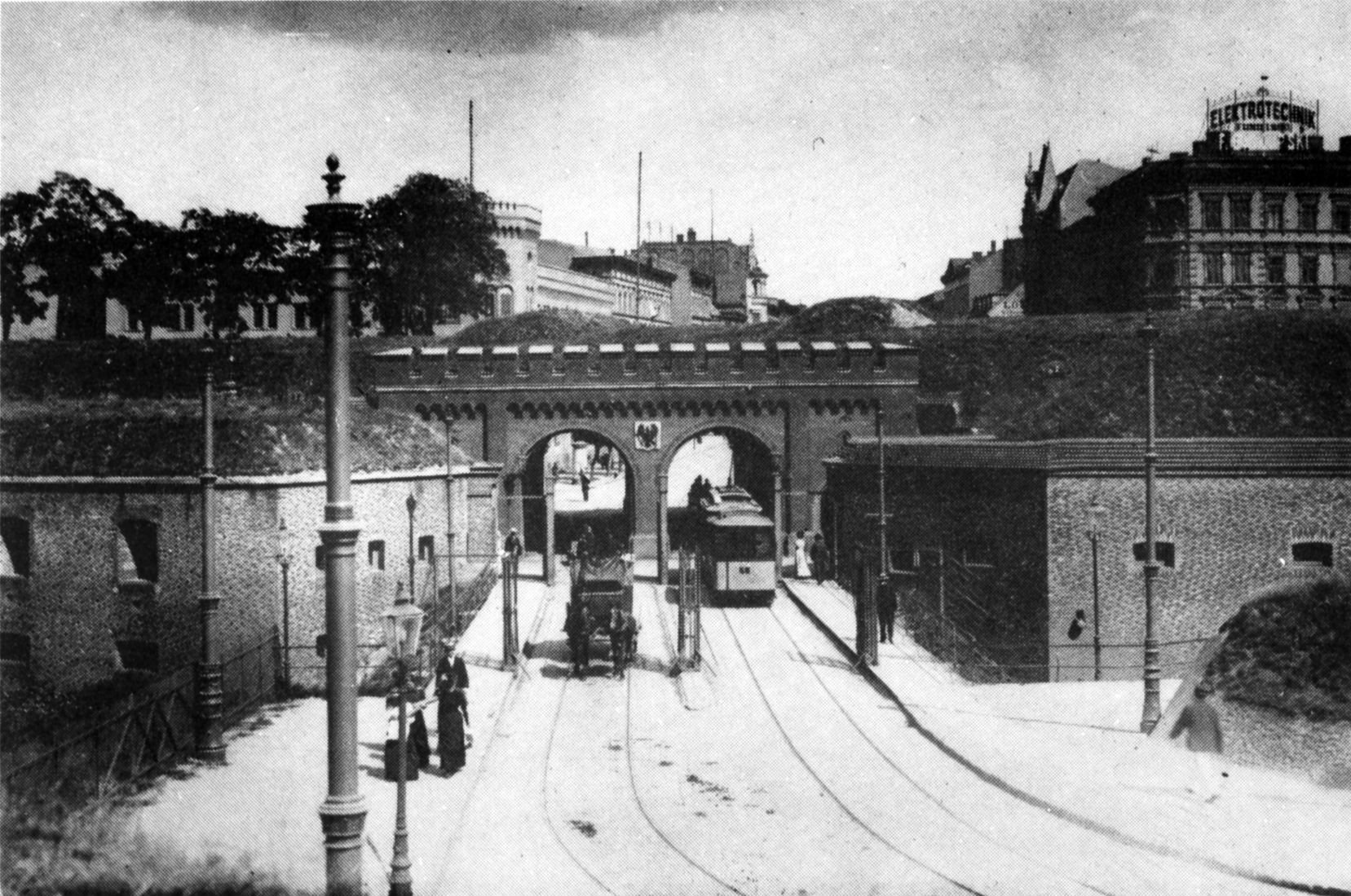
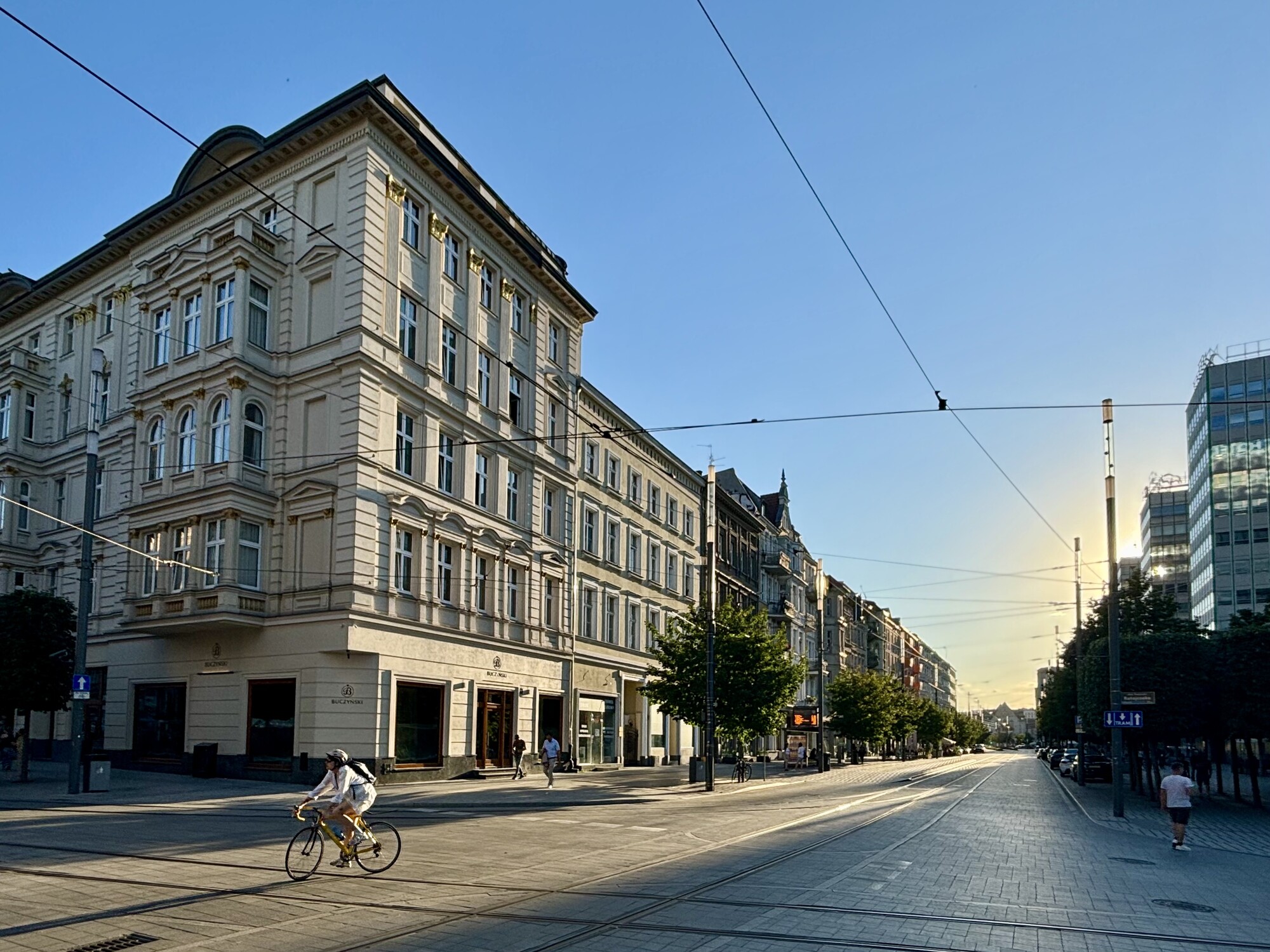
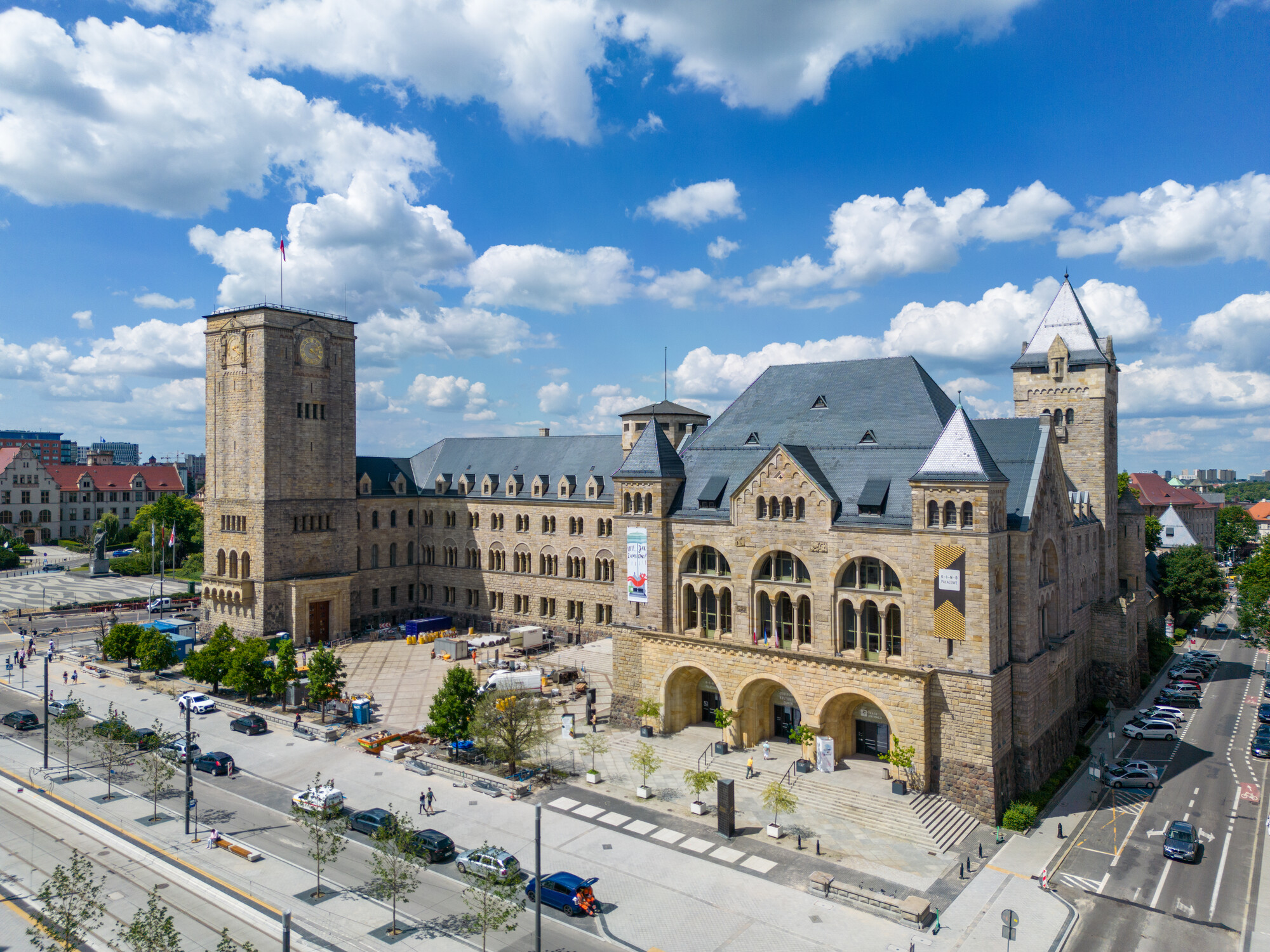
This broad, representative street gained prominence during the era of the Poznań Fortress, when it formed the main artery between the edge of the Old Town and the Berlin Gate - the city’s primary exit toward Berlin and its original train station in Jeżyce. Located almost exactly between where the Imperial Castle and Post Office Directorate stand today, the Berlin Gate was flanked by a drawbridge over a deep moat. If you follow Św. Marcin westward today, it’s not hard to imagine that old moat flowing where the train tracks now run.
The Berlin Gate on Św, Marcin Street, 1890.
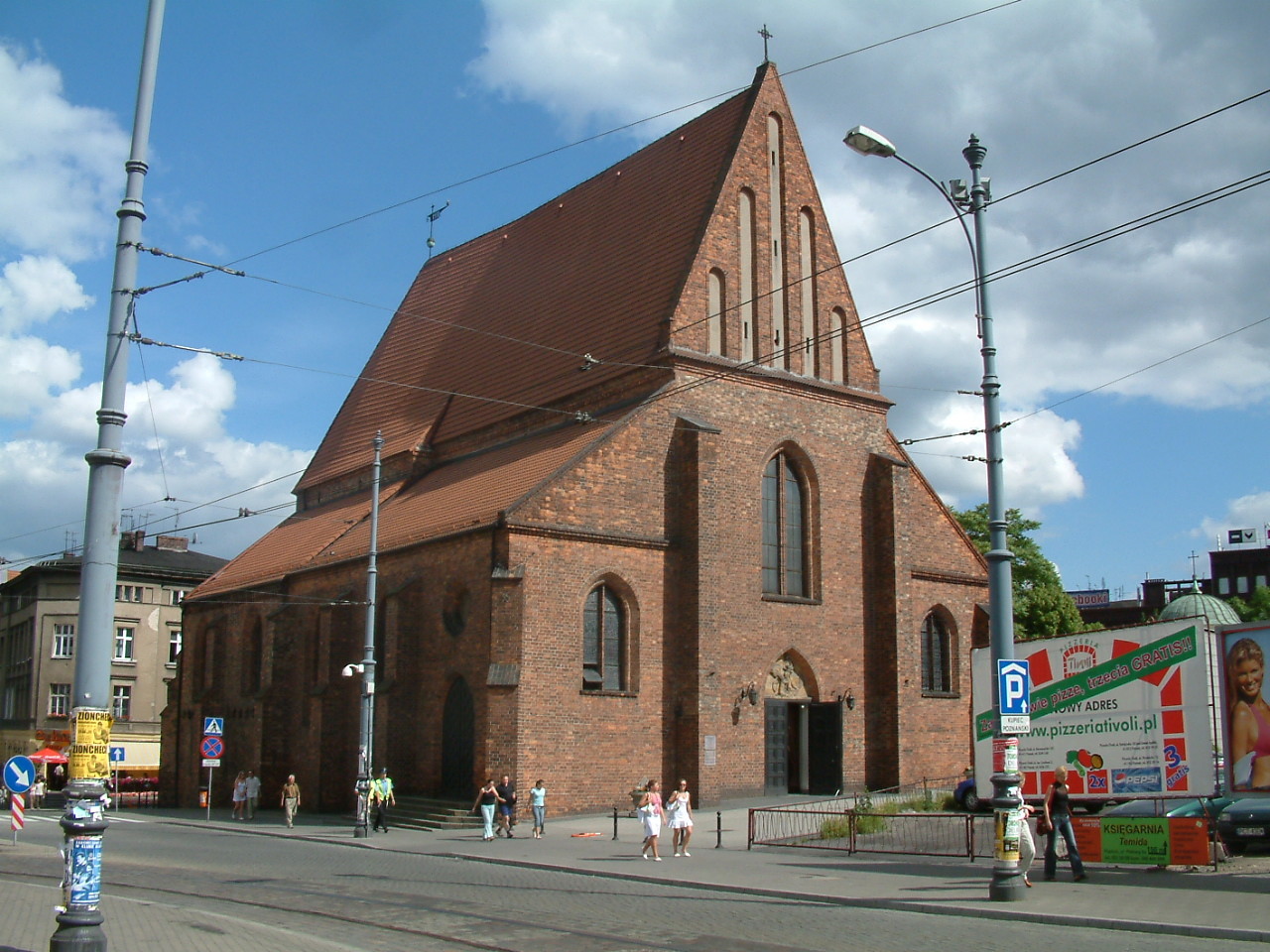
The name Święty Marcin (St. Martin) originates from a small 12th-century settlement clustered around St. Martin’s Church, located at the east end of the street (ul. Św. Marcin 13). Documents from 1132 reveal that St. Martin’s was the only parish on the left bank of the Warta River at that time. Originally just outside the Old Town’s medieval walls, the suburb of St. Martin was officially incorporated into Poznań by the Prussians in 1797.
Extensive damage to the tenements along Św. Marcin Street during World War II allowed for its widening, but also the construction of the infamous Alfa complex (ul. Św. Marcin 40–72). Built between 1965 and 1972, this modernist ensemble of five high-rise apartment blocks connected by a sprawling, two-level shopping gallery is widely blamed for ruining the street. Although recent renovations have certainly improved things, go judge for yourself.