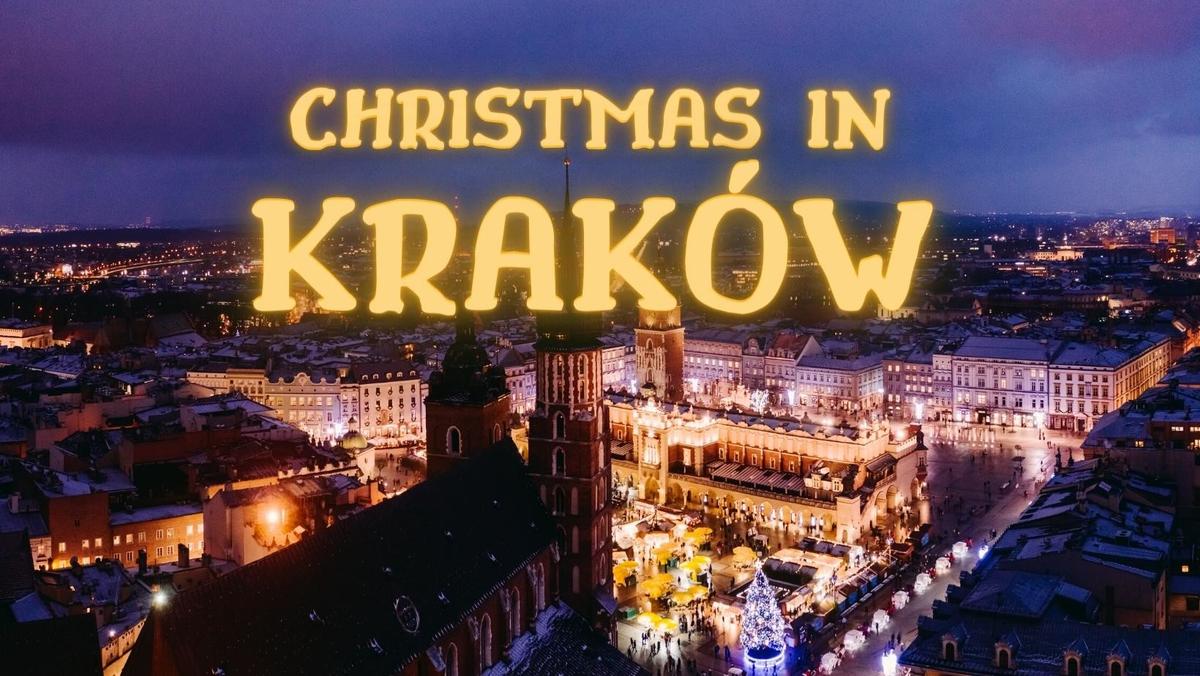
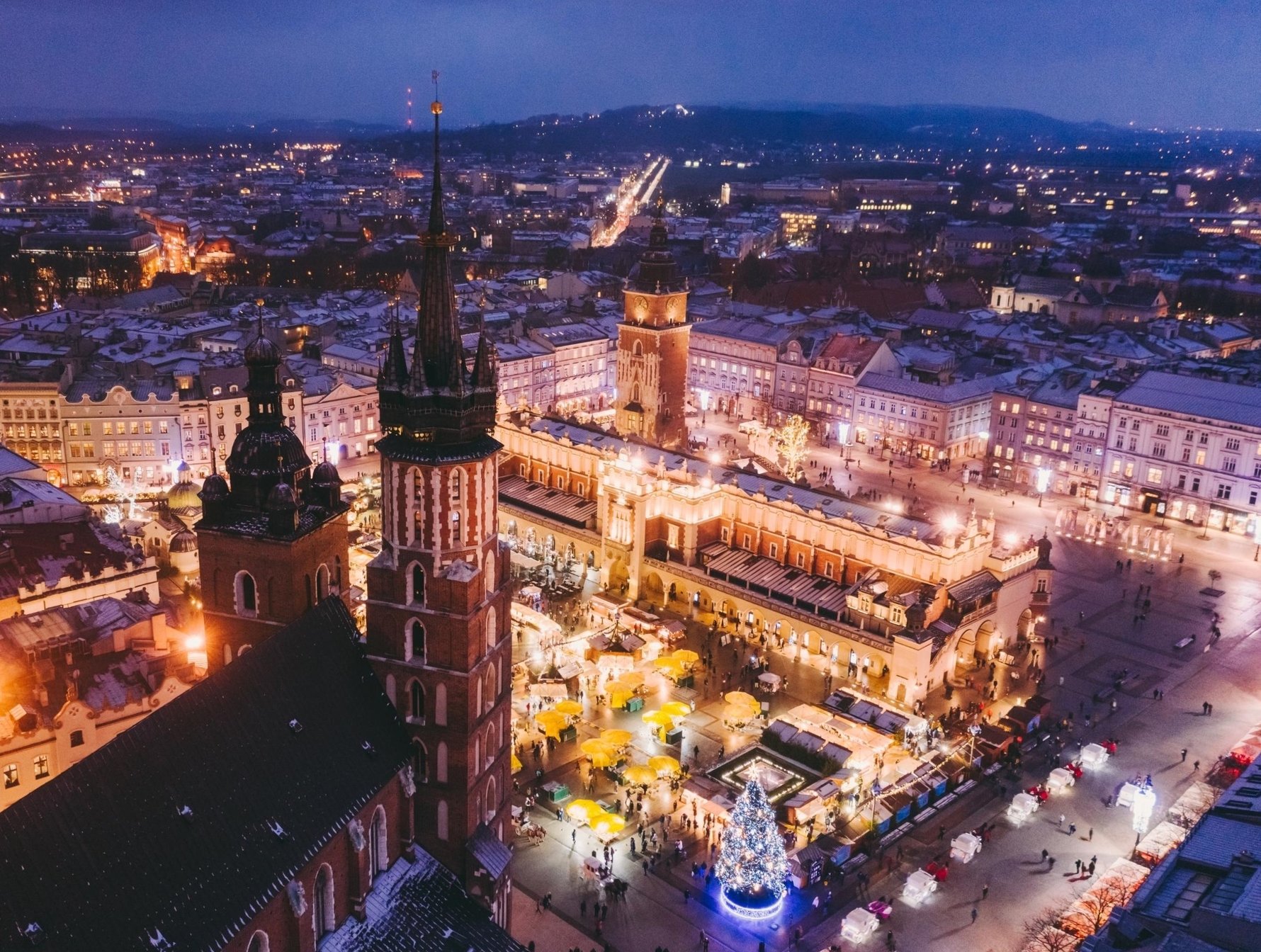
Few places in Europe seem more suited for the holiday season than Kraków, one of the best European destinations for Christmas!
Indeed, when Kraków decks its halls for the holidays it seems to rather effortlessly embody all the magic that Hollywood has taught us Christmas is supposed to have. It’s not all rum-pa-pum-pum and reindeer games, however. Poland has a full calendar of holiday customs and traditions, many of them Catholic in character, that stretch from early December all the way into January, and which will surely make your experience here a unique, and even at times completely foreign one. We help you get into the local spirit by detailing them below, so you’ll be well-read and ready when you find yourself smitten in mittens beneath the mistletoe. But first:
How do you say 'Merry Christmas' in Polish?
Glad you asked! Say it with us now:Wesołych Świąt i Szczęśliwego Nowego Roku!
Okay, let's break that down phonetically:
Veh-so-wick Shvee-ont... (Merry Christmas...)
...ee Shchen-shlee-vay-go No-vay-go Ro-koo! (...and happy New Year!)
Keep practising, you'll get it.
What happens during Christmas in Kraków?
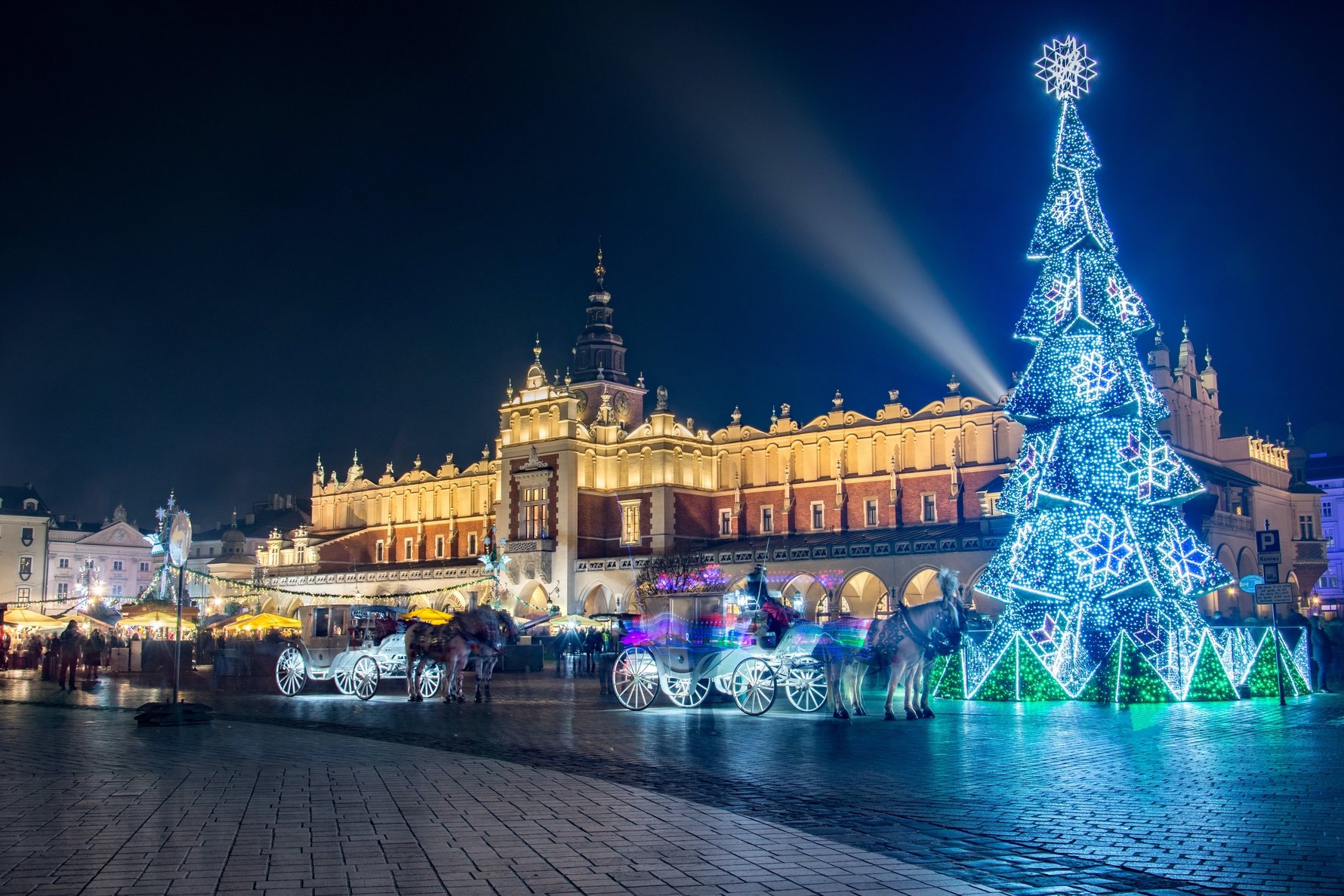
Christmas in Kraków consists of some rather quirky traditions that leave the rest of Europe and the world scratching their heads. The holiday season in Kraków officially kicks-off on the last Friday of November, when the annual Christmas Market opens in the main square. While this is arguably a thinly-disguised exercise of consumerism at the same level seen in many western countries, the true 'observance' of Christmas begins with Advent (written as Adwent in Polish) from December 1st till the 24th. In this time, Poles embark upon the period leading up to Christ's birth by spiritually preparing for Christ’s arrival. Put simply, Poles are expected to refrain from 'indulgences' and attend Holy Mass as much as possible!
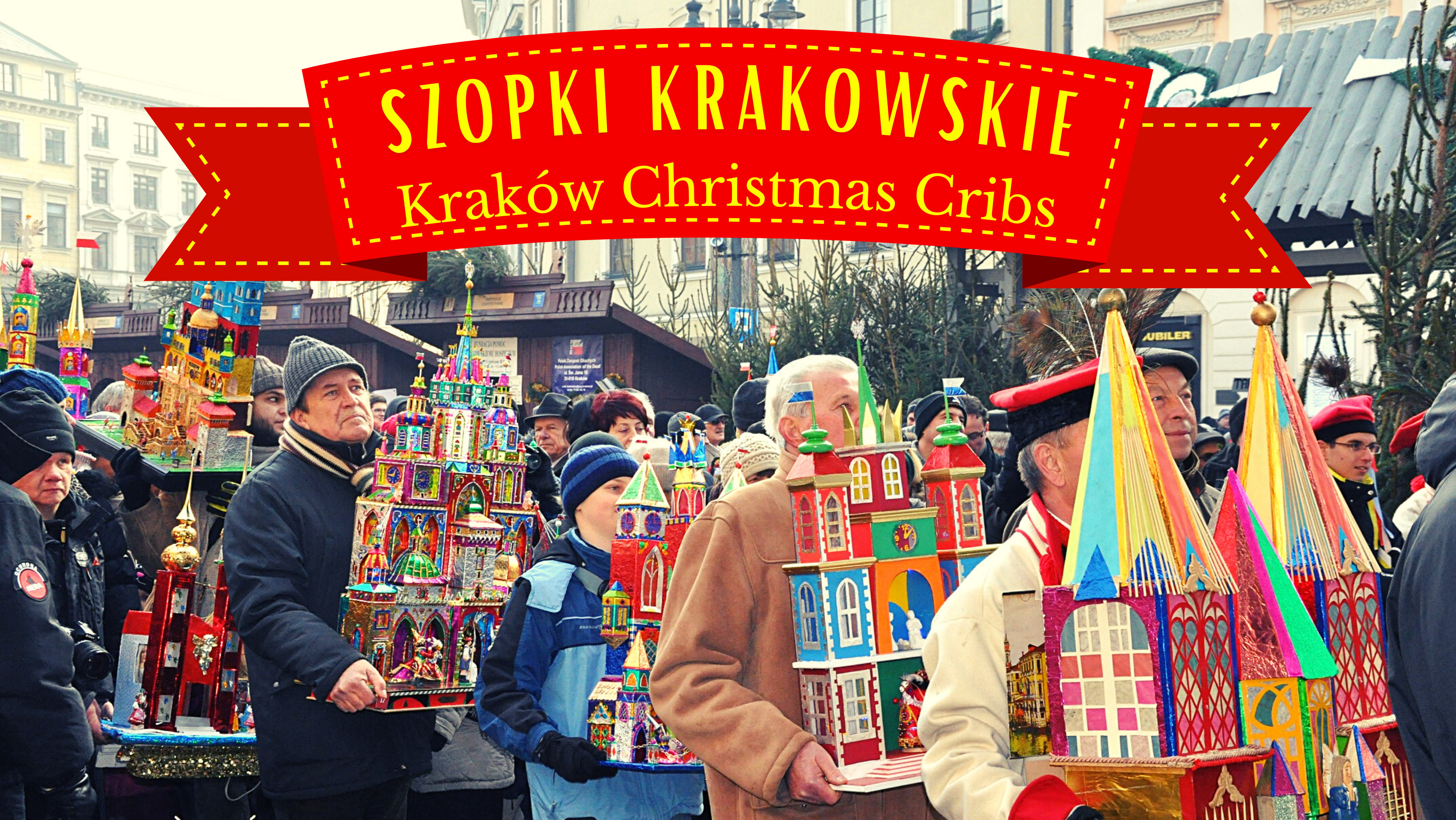
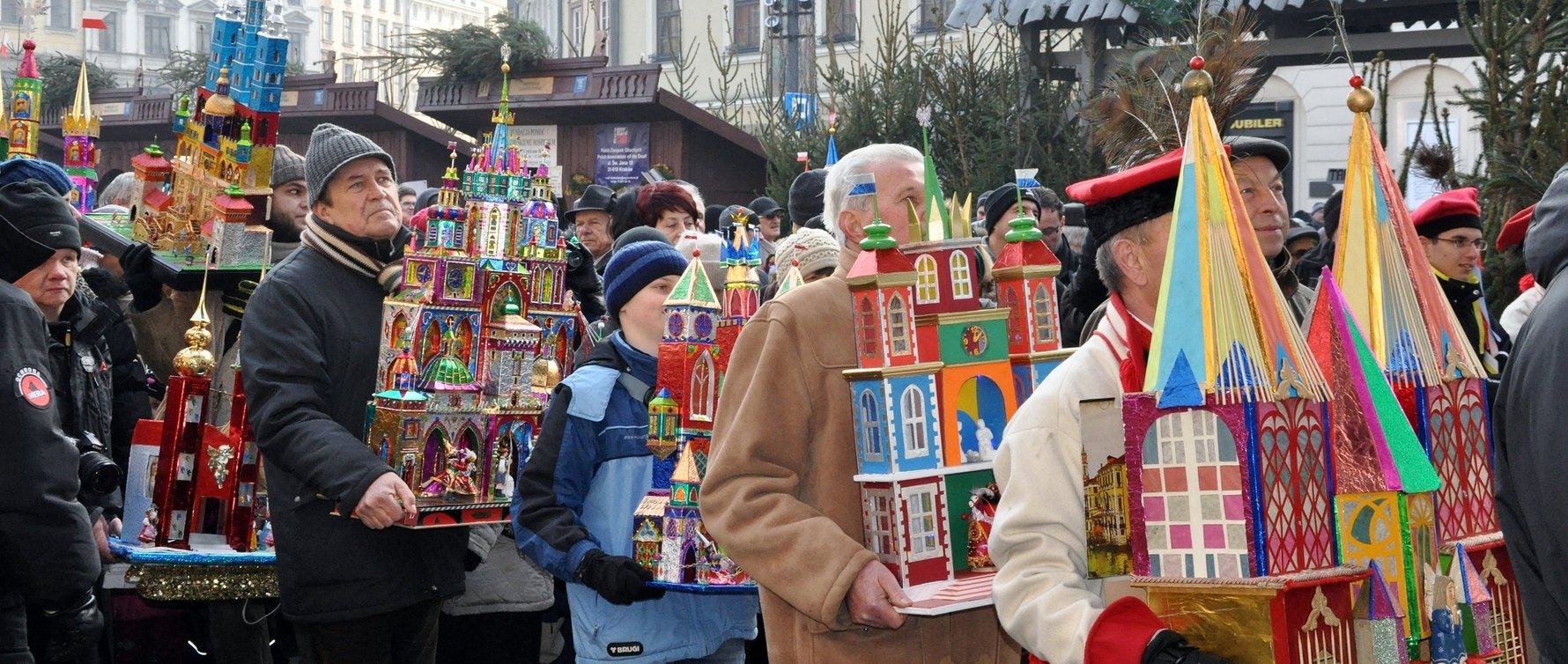
The first Thursday in December also marks the Annual Kraków Christmas Crib Competition. While it may sound like an MTV show where Polish celebrities show off their luxury apartments, this is actually one of Kraków’s most unique traditions. In Poland, a ‘Christmas crib’ or szopka is, essentially, a nativity scene. However, szopki krakowskie (as the idiosyncratic local variety are called) is a sort of strange cross between a nativity scene, gingerbread house and dollhouse, and is the bizarre result of a slowly evolving folk tradition that dates back to the Middle Ages. People from all over the city and the surrounding province of Małopolska bring their unique Christmas creations to the market square at 10:00 to show them off, before a procession takes them away to be judged around 12:00. If you're in town, make sure you check it out! However, if you've missed it, you still get a chance to see the year's szopki during the annual Christmas Crib Exhibit, typically running in Krzysztofory Palace from early December until the end of February.
For more on one of Kraków's most unique holiday traditions, read our full article on Kraków Christmas Cribs (Szopki Krakowskie).
With Christmas Day reserved for family and busy with the celebration of Christ, Saint Nicholas (PL: Święty Mikołaj) shows up three weeks early on December 6th - ‘Dzień Świętego Mikołaja,’ or Saint Nicholas Day. In the Polish tradition, you won't find 'Santa Claus' and his elves hanging out at the North Pole with a Coke sponsorship, but an actual dignified saint in a bishop's hat and a regal purple and gold robe. Eager children write letters to the Saint requesting gifts and put the letter outside on the windowsill so the old codger can drop by and pick up their request during the night. On the 6th, Polish children awake to discover Mikołaj’s benevolence with a gift under their pillow or next to the bed. Of course, there are plenty of opportunities to see Old Saint Mikołaj in the flesh on this day, particularly at festive locations like Christmas markets, preschools and shopping malls.
Looking for the perfect gift? Treat yourself to Kraków's best guidebook.
December 24th is, of course, Christmas Eve – or Wigilia as it’s called in Poland - is one of the biggest feast days of the year and an important time to be with family. As of 2025, Wigilia is the first of three consecutive work holidays. Expect to eat lots of traditional Polish food in the early evening - you definitely don't need lunch!