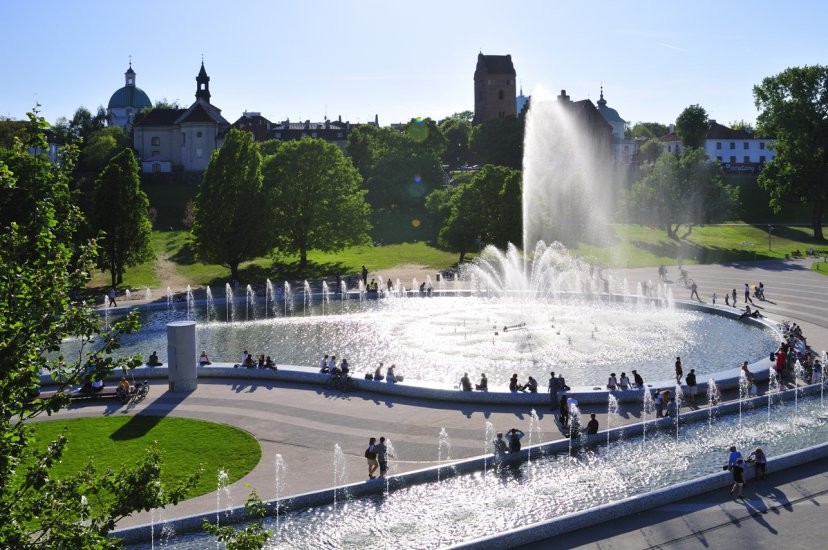
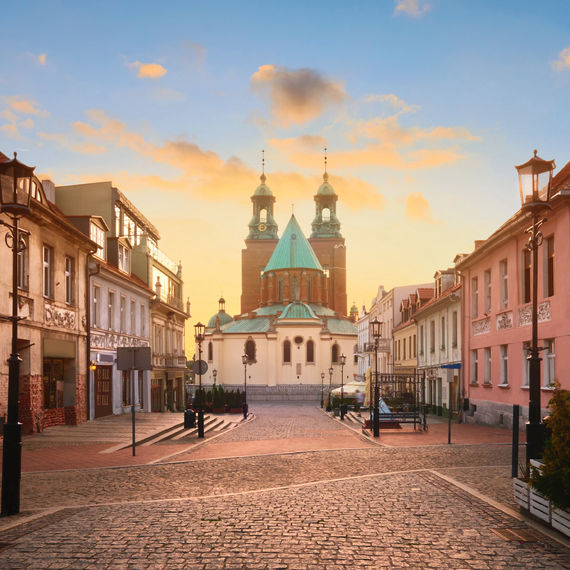
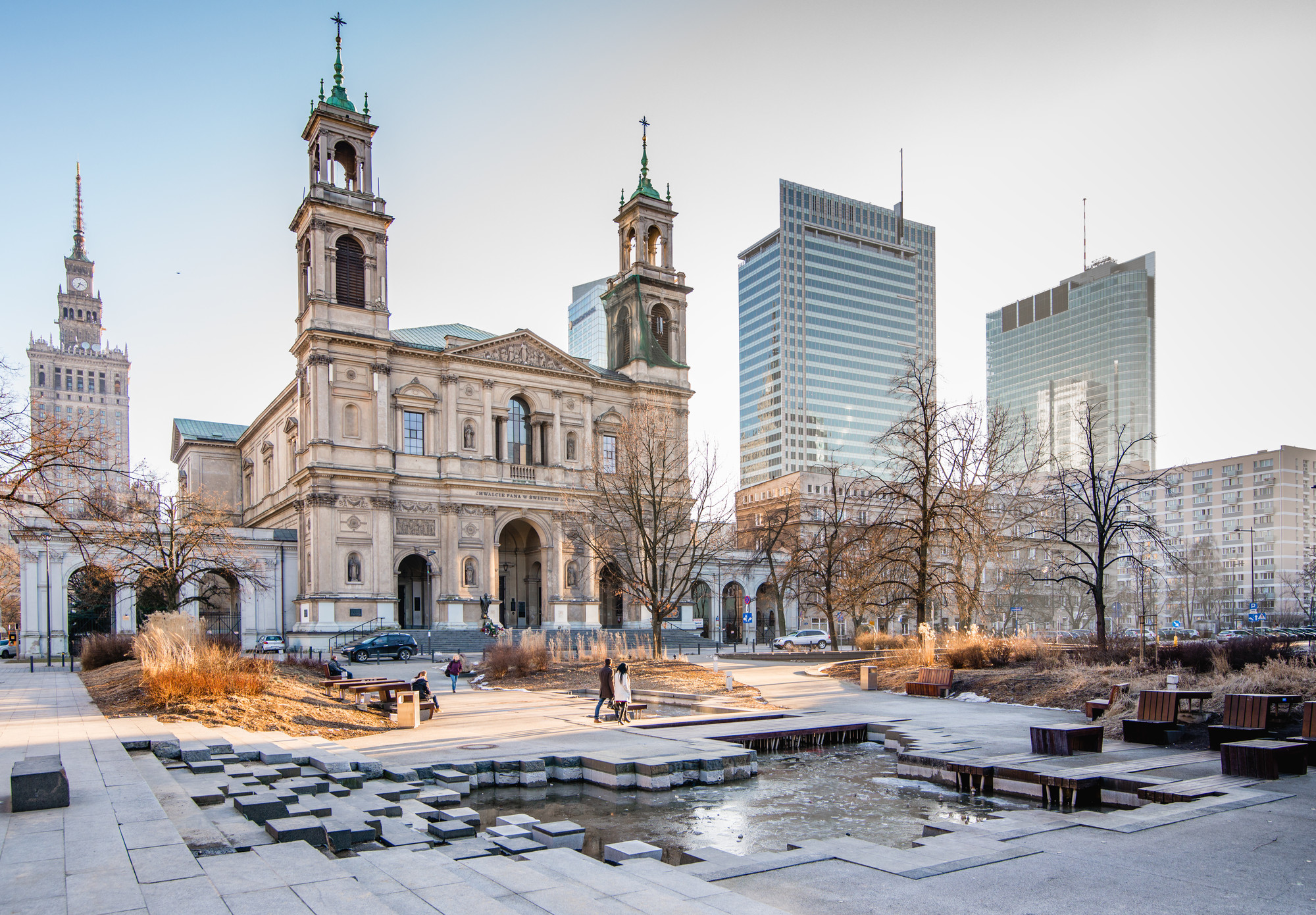
This delightful square connects the city’s past to its present and unites the worlds of commerce, religion, entertainment and art. The main attraction of the square is the large 19th century Renaissance All Saints' Church that stands at one end of the square. The church was heavily damaged during the start of WWII and later in 1941 was inside the Warsaw Ghetto. During the first year of the Ghetto it remained operational and served the Christian Jews who lived within the Ghetto wall. The Parish Priest Fr. Monsignor Marceli Godlewski actually helped to house Jews in the parish rectory and even assisted several Jews to escape the Ghetto entirely. The church was almost destroyed again during the Warsaw Uprising. It was eventually rebuilt after the war only to be surrounded by tall buildings on almost all sides. This was more an ideological move than an architectural one as the Communist regime attempted to hide the iconic church and diminish its power. Hence the triangular square’s exceedingly eclectic architecture. The square was totally renovated and features dozens of benches, neatly landscaped grassy areas and even a pond with a waterfall. It is very well lit at night as well so you can come visit the many pubs bars and cafes that line the square any time day or night. Joining the square is ul. Próżna, the only full street that survived the Jewish Ghetto. For a long time, it remained derelict, a window onto the past, however, in recent years, one side has undergone renovation, restored to its pre-war splendour, while the second side awaits revival. It is here that the former heart of the Jewish area of Warsaw undergoes a mini-revival in the form of the Singer Jewish Festival, which has taken place every year in late August/early September since 2004.
Plac Grzybowski
1/4
Venue Info